Purple Pitcher Plant
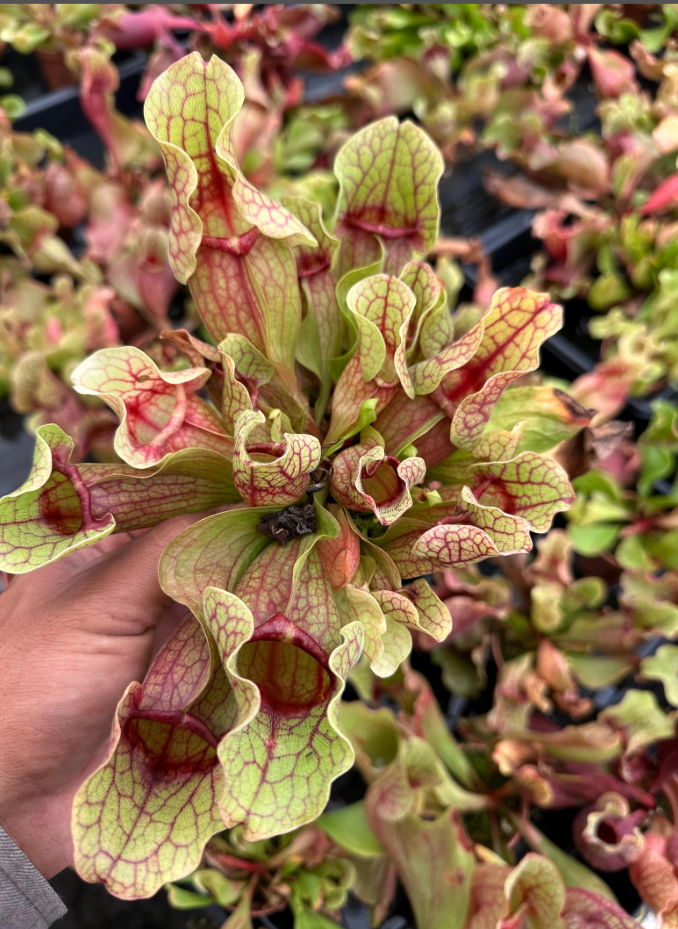
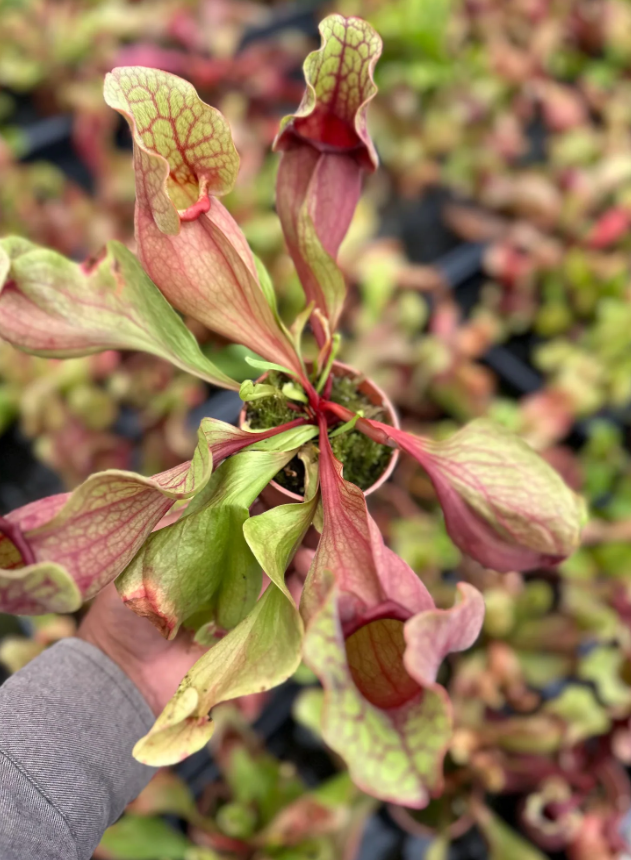
Sarracenia purpurea, commonly known as the Purple Pitcher Plant, is a cold-hardy, perennial carnivorous plant known for its deep purple to reddish-green pitchers, which form low, rosette-shaped clusters at the base. These modified leaves are shaped like open, upright tubes that collect rainwater—unlike many pitcher plants that use digestive enzymes, S. purpurea relies on trapped rainwater and bacteria to break down its prey.
This species lures insects with nectar and color, trapping them in its water-filled pitchers where they are slowly digested. It’s one of the few carnivorous plants native to colder climates and is particularly well-suited to bog gardens or container growing.
⸻
🌱 Plant Characteristics:
• Pitchers: Short and stout, usually 4–8 inches tall, mottled with green, red, and purple
• Flowers: Large, nodding, and deep maroon in color, blooming in late spring to early summer
• Growth Habit: Compact rosette; spreads slowly through rhizomes
• Dormancy: Goes dormant in winter and regrows in spring
⸻
☀️ Care Instructions:
• Light:
Full sun to partial sun. At least 4–6 hours of direct sunlight daily encourages strong coloration and pitcher development.
• Water:
Use rainwater, distilled, or reverse osmosis water only. Keep soil consistently wet and never allow it to dry out. Sit the pot in a shallow tray of water for best results.
• Soil:
Plant in a nutrient-poor, acidic mix—typically 1:1 sphagnum peat moss and perlite or sand. Never use regular potting soil or fertilizer.
• Humidity:
Prefers high humidity, but can adapt to outdoor conditions with proper watering.
• Temperature:
Cold-hardy down to zone 3. Requires winter dormancy—leave outdoors in cooler climates or simulate dormancy indoors by keeping it cold (35–50°F) for 3–4 months.
⸻
🌸 Fun Facts:
• Native peoples used the liquid inside the pitchers medicinally.
• It’s one of the few carnivorous plants that thrives in temperate climates.
• Pollinators and prey are attracted to different parts of the plant, minimizing the risk of “eating” its own pollinators!